 ultimate-guide
Choosing Durable Flooring for Kitchens: 2026 Guide
Table of Contents
- Best Kitchen Flooring for High Traffic: Quick Comparison
- Pros and Cons of Kitchen Flooring Materials
- Waterproof Kitchen Flooring Options That Handle Spills
- Subfloor Preparation: The Step Homeowners Skip
- Pet Durability and Repairability for Kitchen Floors
- Eco-Friendly and Non-Toxic Flooring Choices
- Conclusion
- Frequently Asked Questions
Last Updated: September 20, 2026
Best Kitchen Flooring for High Traffic: Quick Comparison
Choosing durable flooring for kitchens comes down to matching material performance to how your household actually lives. Porcelain tile, luxury vinyl plank, and engineered hardwood each handle traffic, spills, and dropped pans differently, and the right pick depends on your priorities.
At Cole Home Service & Landscape Construction, we have installed flooring across hundreds of kitchens over more than 25 years, and the pattern is consistent: homeowners who match material to lifestyle are happier five years later than those who chase looks alone. Below, we break down the materials by durability, water resistance, and maintenance so you can choose with confidence.
| Material | Water Resistance | Traffic Rating | Best For |
|---|---|---|---|
| Porcelain tile | Waterproof | Excellent | Busy families, wet zones |
| Ceramic tile | Water-resistant | Good | Budget remodels |
| Luxury vinyl plank | Waterproof | Excellent | Pets, kids, DIY installs |
| Natural stone | Varies by type | Good | High-end aesthetics |
| Engineered hardwood | Low | Moderate | Open-plan living areas |
Pros and Cons of Kitchen Flooring Materials
Each material brings trade-offs worth understanding before you commit. The Tile Council of North America installation handbook is a useful reference for understanding how tile performs underfoot.
Porcelain and Ceramic Tile
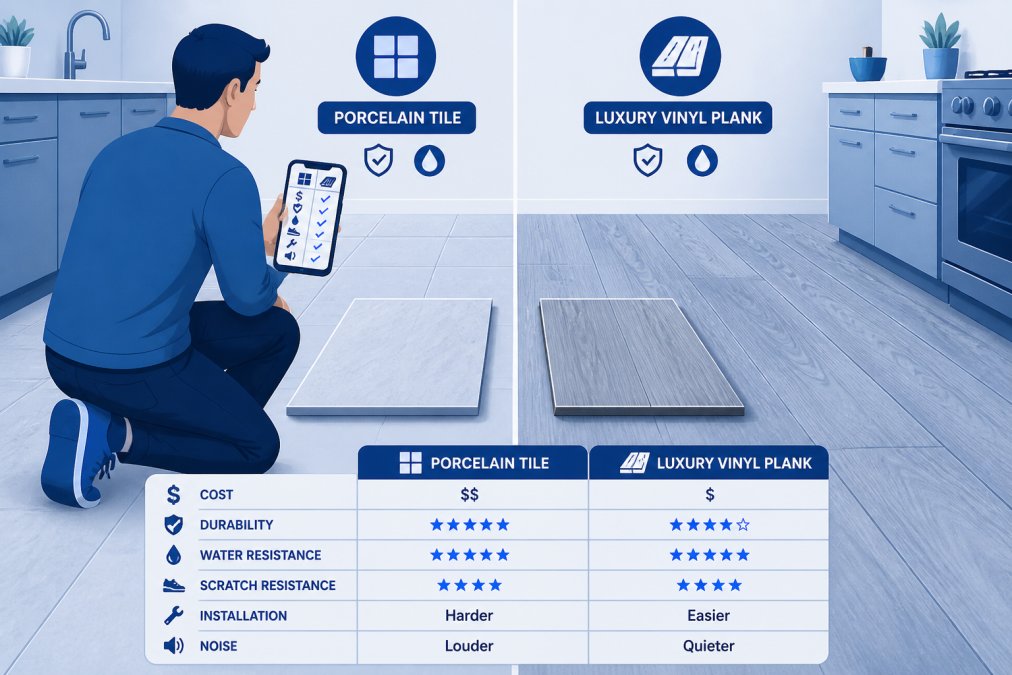
Porcelain tile is pressed denser and fired hotter than ceramic, which gives it a water absorption rate under 0.5 percent and makes it the stronger choice for kitchens with heavy foot traffic and frequent spills. Its density also delivers excellent scratch resistance, a dropped knife or dragged chair is unlikely to leave a mark. Glazed porcelain resists stains well, and through-body porcelain (where the color runs through the full thickness) hides chips better than a surface glaze.
The main drawbacks are comfort and impact. Standing on tile through a long prep session is tiring because the surface has almost no give, and dropped glassware rarely survives the landing. Grout lines need sealing and periodic scrubbing, especially in light colors, and unsealed grout stains easily in a kitchen.
Ceramic costs less but chips more easily, absorbs water through unglazed edges, and is generally rated for floor use only in lower-traffic areas. For a kitchen, porcelain is usually worth the upgrade.
Luxury Vinyl Plank (LVP)
LVP is the practical winner for most busy kitchens. It is fully waterproof through the plank, comfortable underfoot, and its wear layer, typically measured in mils, with 12 mil suitable for residential kitchens and 20 mil or higher for heavy traffic, determines how well it resists scratches and dulling. LVP handles pet claws, dropped utensils, and standing water without damage, and most products can be installed as a floating floor over a properly prepared substrate.
The honest limitations: lower-end LVP with a thin wear layer can dent under the concentrated weight of a refrigerator or range, and the material cannot be sanded or refinished the way wood can. Once the wear layer is compromised, the plank has to be replaced rather than restored.
Natural Stone and Engineered Hardwood
Natural stone such as granite, travertine, and slate delivers unmatched aesthetic character, but porosity varies widely. Granite is dense and stain-resistant; travertine and slate need regular sealing to prevent water damage, and even sealed stone can etch from acidic spills like citrus juice or vinegar.
Engineered hardwood offers the warmth of real wood with better dimensional stability than solid hardwood, because its plywood core resists the seasonal expansion and contraction that cracks solid boards. It remains vulnerable to standing water, though, and should never be used in a kitchen with a dishwasher leak risk. It can typically be refinished once or twice depending on the thickness of its wear layer, which is a genuine advantage over LVP when the surface eventually dulls.
Waterproof Kitchen Flooring Options That Handle Spills
"Waterproof" and "water-resistant" are not interchangeable, and the difference determines what happens to your kitchen floor after a slow leak you do not notice for a week. Waterproof means water cannot penetrate the material itself. Water-resistant means the surface repels water but the material can still absorb it through edges, seams, or the substrate beneath.
Only two categories are genuinely waterproof through the full thickness of the material:
Porcelain tile. Porcelain is fired at higher temperatures and pressed more densely than ceramic, which drives its water absorption rate below 0.5 percent, the threshold the tile industry uses to classify a tile as impervious. Water sits on the glazed surface until you wipe it up. The weak point is not the tile; it is the grout and the substrate. Cement-based grout is porous and will wick water if left unsealed, and if water reaches the subfloor through a failed grout line, the tile stays intact while the structure beneath it does not.
Luxury vinyl plank (LVP). A rigid-core or WPC (wood plastic composite) plank is waterproof through its entire cross-section, the wear layer, the printed design layer, the core, and the backing. A spill on the surface, or a leak that pools under the refrigerator for days, will not swell, warp, or delaminate the plank. The vulnerability is at the seams. If planks are not clicked tightly or the floor is installed as a floating system over a wet slab, water can migrate through the joints and trap moisture underneath, where mold can grow even though the plank itself is fine.
What falls short of waterproof:
- Ceramic tile resists water on its glazed face but absorbs moisture through unglazed edges and the body of the tile. It is water-resistant, not waterproof.
- Engineered hardwood has a plywood or HDF core that swells when water reaches it. A dishwasher leak that goes unnoticed overnight can cup the planks permanently.
- Solid hardwood is the most vulnerable option in a kitchen and is generally not recommended where water lines run through the floor.
- Natural stone varies by type. Granite is dense and largely stain-resistant; travertine, limestone, and slate are porous and require sealing to slow, not stop, water penetration.
For kitchens on slab foundations, where moisture wicks upward through concrete, or in homes with a history of appliance leaks, porcelain and LVP are the only two materials that reliably tolerate standing water. EPA guidance on indoor air quality and moisture control notes that excess moisture in flooring creates conditions for mold growth, which is why the waterproof distinction matters beyond simple convenience.
Subfloor Preparation: The Step Homeowners Skip
Subfloor preparation is the step that determines whether your new kitchen floor lasts a decade or fails in two years. No flooring material performs well over an uneven, damp, or flexing subfloor, and this is where most DIY installations go wrong.
A common mistake is laying tile or LVP directly over old vinyl or adhesive residue. That shortcut causes cracking, popping, and uneven grout lines within months.
Pet Durability and Repairability for Kitchen Floors
Pet-specific durability and repairability separate materials that look good on day one from those that still look good in year ten. Dogs and cats introduce two problems: scratches from claws and accidents that sit on the surface.
Eco-Friendly and Non-Toxic Flooring Choices
Eco-friendly flooring choices have expanded significantly as manufacturers respond to demand for lower emissions and safer materials. The key concern in kitchens is indoor air quality, since flooring adhesives and finishes can off-gas volatile organic compounds.
Conclusion
Kitchen flooring decisions get complicated fast, and hidden subfloor problems or a material that fails under real household conditions can turn a renovation into a repeat expense. Cole Home Service & Landscape Construction has handled these exact situations for over 25 years, from moisture-damaged subfloors to pet-proof installations, and offers expert guidance for homeowners who do not have a design picked out yet.
Frequently Asked Questions
What is the most durable flooring option for a kitchen?
Porcelain tile is the most durable kitchen flooring for most homes. Its density and low porosity resist scratches, moisture, and heavy foot traffic better than vinyl, laminate, or hardwood. Natural stone like granite and slate also performs well but requires sealing. For a balance of durability and comfort, luxury vinyl plank with a thick wear layer (20 mil or higher) is a close second and handles water damage better than wood.
What are the pros and cons of luxury vinyl plank in kitchens?
Luxury vinyl plank (LVP) offers strong moisture resistance, comfort underfoot, and easy installation over most subfloors. It resists stains, scuffs, and everyday spills. The downsides: it can dent under heavy appliances, some lower-cost products fade in direct sunlight, and damaged planks are hard to patch without replacing a full section. Choose a thick wear layer for high-traffic kitchens.
Which kitchen flooring materials resist water damage best?
Porcelain tile and luxury vinyl plank are the top waterproof kitchen flooring options. Porcelain resists water because of its low porosity and impervious glaze. LVP is fully waterproof when installed with sealed seams. Ceramic tile is water-resistant on its glazed surface but can absorb moisture through unglazed edges. Natural stone like granite and travertine needs regular sealing because its porosity allows water to penetrate. Engineered hardwood and laminate are the weakest against standing water and should be avoided near dishwashers and sinks.
How does subfloor preparation affect the longevity of kitchen flooring?
Subfloor preparation decides how long your kitchen floor lasts. Uneven or damp subfloors cause tile to crack, grout lines to fail, and vinyl planks to lift at the seams. A proper install includes checking moisture levels, leveling low spots, and repairing any water damage before the new floor goes down. Skipping this step is the most common reason kitchen floors fail early, even when the material itself is durable.