 listicle
Average Cost for Custom Decks: 2026 Pricing Breakdown
Table of Contents
- Average Cost for Custom Decks: What Homeowners Actually Pay
- Deck Material Cost Comparison: Wood, Composite, and PVC
- Custom Deck Design Ideas 2026: Features That Drive Cost
- Average Deck Building Timeline and Labor Costs
- Permits, Footings, and Site Preparation Fees
- Resurfacing vs. Building from Scratch: Cost Differences
- Financing Options and ROI: Does a Custom Deck Add Value?
- How to Vet a Deck Contractor
- Frequently Asked Questions
Last Updated: September 16, 2026
Average Cost for Custom Decks: What Homeowners Actually Pay
The average cost for custom decks is not a single number, and that is the first thing most homeowners get wrong. National "per square foot" averages floating around the internet rarely survive contact with a real project estimate, because they ignore site conditions, labor rates, and the custom features that define a truly custom build. At Cole Home Service & Landscape Construction, we have spent over 25 years building decks, and the honest answer is that pricing depends on materials, size, complexity, and site accessibility.
National Averages vs. Real Project Estimates
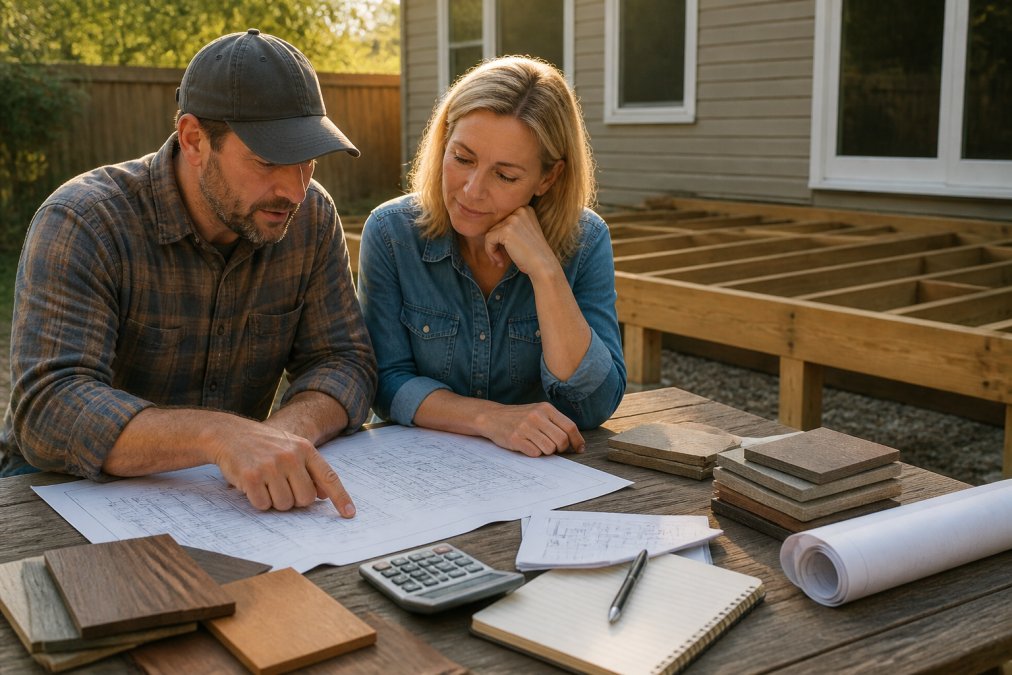
National averages are useful as a starting reference, not a final answer. A basic pressure-treated platform in a flat, accessible yard shares almost nothing in common with a multi-level composite deck with custom railings and built-in lighting. The gap between the two is where most budgets fall apart.
Deck Material Cost Comparison: Wood, Composite, and PVC
Material choice is the single biggest lever on your total, and it is also where most national averages mislead homeowners. The table below summarizes how the three main categories compare on installed cost, maintenance, and lifespan. Installed cost includes decking, framing, fasteners, and standard railing, not custom features, which are priced separately.
| Material | Typical Installed Cost per Sq. Ft. | Maintenance | Typical Lifespan |
|---|---|---|---|
| Pressure-treated lumber | $15-$25 | Annual sealing/staining | 10-15 years |
| Composite decking | $25-$45 | Occasional cleaning | 25-30 years |
| PVC decking | $35-$60+ | Minimal cleaning | 30+ years |
Pressure-Treated Lumber
Pressure-treated lumber remains the most affordable option and the go-to for budget-conscious builds. It is widely available, easy to work with, and familiar to every framing crew. The tradeoff is maintenance: untreated neglect leads to splintering, warping, and a shortened deck lifespan. Many homeowners find that annual sealing is a fair exchange for a lower upfront cost. On a 300-square-foot deck, the difference between pressure-treated and composite decking alone can run $3,000-$6,000 in materials, before labor.
Composite and PVC Decking
Composite decking blends wood fibers and recycled plastic, delivering the look of hardwood without the annual upkeep. PVC decking takes that further with full synthetic construction and the highest resistance to moisture and fading. Brands like Trex and TimberTech have made these materials mainstream, and the higher material markup is often offset by lower long-term maintenance requirements. For homeowners planning to stay in their home for decades, the math frequently favors composite or PVC.
How Material Choice Changes the Total
Material cost is only part of the equation. Heavier composite and PVC boards require different fasteners (hidden clip systems instead of face screws), which adds labor time. Composite also expands and contracts more than wood, so framing spacing and gapping must be adjusted, a detail that separates experienced crews from low-bid outfits. When you compare quotes, ask whether the price includes hidden fasteners, stair nosing, and fascia boards, because those items are frequently left out of the base number and added later as change orders.
U.S. Consumer Product Safety Commission guidance on deck safety
Custom Deck Design Ideas 2026: Features That Drive Cost
Custom deck design ideas 2026 lean toward integrated outdoor living: multi-level layouts, built-in seating, pergolas, and low-voltage lighting. Each feature adds cost, but each also adds function and curb appeal. Here is what typically drives the number up:
- Multi-level framing: More substructure, more footings, more labor
- Custom railing systems: Cable, glass, and metal railings cost more than standard wood
- Built-in benches and planters: Finish carpentry adds skilled labor hours
- Deck lighting and drainage: Electrical work and hidden drainage systems
- Custom shapes and curves: Angled cuts and non-standard layouts slow framing
Average Deck Building Timeline and Labor Costs
Labor is where most generic estimates fall short. An average deck building timeline runs roughly one to three weeks for a straightforward project, and longer for complex custom designs with covered structures or extensive finish work. Labor rates vary by region, season, and crew availability, and they usually represent the largest share of your total project estimate.
Permits, Footings, and Site Preparation Fees
Permits, footings, and site preparation are the costs homeowners most often forget to budget for. Most jurisdictions require a building permit for a new deck, and the fee varies by project value and local zoning requirements. Footings must extend below the frost line and be sized to carry the load, which means excavation, concrete, and inspection time.
International Code Council deck construction and building codes
Resurfacing vs. Building from Scratch: Cost Differences
Resurfacing costs less than building from scratch when the existing substructure, footings, and framing are sound. In that case, you replace only the decking boards and possibly the railing, which cuts both material and labor costs significantly. A professional inspection determines whether the substructure can safely carry new boards.
| Scenario | Best Option | Why |
|---|---|---|
| Sound framing, worn boards | Resurfacing | Lower cost, faster timeline |
| Rotten or undersized framing | Full rebuild | Safety and structural integrity |
| Changing size or layout | Full rebuild | New footings and design |
Financing Options and ROI: Does a Custom Deck Add Value?
A custom deck can add value to your home by expanding usable outdoor living space, which buyers consistently rank as a priority. The return on investment depends on your market, the quality of the build, and how well the deck integrates with the home. A well-built deck improves curb appeal and can shorten time on market. Outdoor living improvements can recoup a meaningful share of their cost at resale, though the exact figure varies widely by neighborhood and price tier.
Financing a $15,000-$50,000+ Project
A custom deck is a high-ticket project, and most homeowners do not pay cash. The three most common routes are:
- Home equity loan: A lump sum borrowed against your home's equity, repaid at a fixed rate over a set term. Best when you want a predictable monthly payment and know your total project cost upfront.
- Home equity line of credit (HELOC): A revolving line you draw from as needed, usually with a variable rate. Useful when the project scope may expand or you want to pay down the balance faster without prepayment penalties.
- Contractor payment schedule: Milestone-based payments tied to project phases, typically a deposit at signing, a draw when framing is complete, a draw at decking, and a final payment at inspection. This is not a loan; it is how the money flows during construction.
What Actually Drives ROI
The best ROI comes from a deck that matches your home's style and your neighborhood's expectations. Overbuilding with features buyers in your area do not value rarely pays back. Three factors matter most:
- Integration with the home: A deck that matches the home's siding, roofline, and color palette reads as original construction, not an add-on.
- Usable square footage: Buyers value functional outdoor space, a deck that is too small to seat a family or too large for the lot can both hurt value.
- Material durability: Composite and PVC decks often appeal to buyers who do not want to inherit a maintenance schedule, which can justify a higher list price in competitive markets.
How to Vet a Deck Contractor
Vetting a contractor is the step that protects both your budget and your timeline. Use this checklist before signing anything:
- Verify the contractor's license and insurance
- Ask for references from projects completed in the last two years
- Request a written, itemized estimate with a payment schedule
- Confirm who handles permits and inspections
- Get warranty terms in writing
- Ask how change orders are priced and approved
Federal Trade Commission guidance on home improvement scams
Frequently Asked Questions
How much does a 14x20 deck cost?
The cost for a 14x20 deck (280 square feet) depends on materials and site conditions. Pressure-treated lumber sits at the lower end, while composite and PVC decking push toward the higher end. Custom features like built-in seating, lighting, or complex railing systems add cost. Labor rates in your area and permit fees also affect the final price. Get a project estimate from a local contractor to see what your specific design will run.
What is the most expensive part of a deck?
Labor and materials for the deck surface and substructure usually account for the largest share of a custom deck budget. Composite or PVC decking costs more than pressure-treated lumber, and complex designs with multiple levels, curved edges, or custom railing systems increase both material and labor costs. Footings, site preparation, and permits add fixed costs that vary by location. Upgrading railing systems or adding built-in features also raises the total.
Does a custom deck add value to a home?
A well-built custom deck can improve curb appeal and make your home more attractive to buyers, especially in areas where outdoor living space is a priority. While you may not recoup the full cost at resale, a deck extends your usable living area and can set your home apart. Maintenance requirements and material choice affect long-term value. Composite and PVC decking often appeal to buyers who want low-maintenance outdoor spaces.
What materials are most cost-effective for custom decks?
Pressure-treated lumber remains the most cost-effective material upfront, though it requires more maintenance over time. Composite decking costs more initially but resists fading, staining, and moisture, which can lower long-term upkeep. PVC decking sits at the higher end but offers the best moisture resistance. Your choice depends on budget, climate, and how much maintenance you're willing to do. A deck material cost comparison helps you weigh upfront price against longevity.
How long does it take to build a custom deck?
Most custom decks take two to four weeks from start to finish, depending on size, complexity, and weather. Site preparation, footings, and framing take the first week. Decking, railing, and finish work fill the rest. Permits and inspections can add time. A contractor with reliable communication will give you a realistic timeline and keep you updated on progress. Ask about the average deck building timeline before work begins.