 how-to
How to Spot Quality Craftsmanship Before You Hire
Table of Contents
- What Quality Craftsmanship Looks Like on an Active Job Site
- Signs of a Professional Contractor vs. a Handyman
- Questions to Ask Before Hiring a Contractor About Materials
- How to Evaluate Contractor References and Past Work
- Repairability and Structural Integrity: The Long-Term Test of Quality Craftsmanship
- Sensory Evaluation: Using Sight and Touch to Judge Quality
- Conclusion: Trust Your Eyes and Your Gut
- Frequently Asked Questions
Last Updated: September 9, 2026
Quality craftsmanship is the difference between a project that lasts decades and one that needs repairs within a season, yet most homeowners struggle to identify it before signing a contract. Learning how to spot quality craftsmanship before you hire protects your investment and spares you the frustration of costly rework. At Cole Home Service & Landscape Construction, we have over 25 years of experience building decks, fences, and interior remodels.
Most guides tell you to "check the reviews" and leave it there. Reviews tell you about past projects; they do not tell you whether the crew currently on your roof or in your kitchen knows what they are doing. The real test happens in person, and it starts with how the work looks mid-process, not after the cleanup crew hides the mistakes.
What Quality Craftsmanship Looks Like on an Active Job Site
Quality craftsmanship is visible in the details of work in progress, long before the final coat of paint or stain goes on. An unfinished job site is the most honest window into a contractor's standards because there is no finish hiding the structural decisions underneath. The universal marker of quality is how the maker handles the stages that will be hidden later.
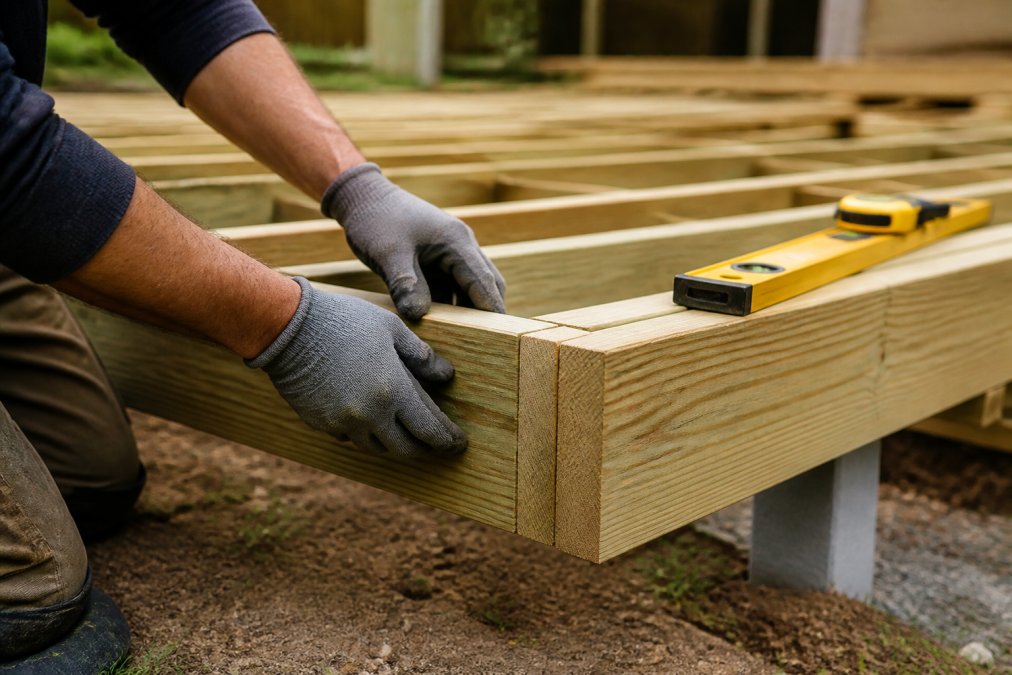
Walk the site and look for organization. A disciplined crew keeps tools staged, materials covered, and the workspace clear of debris. Chaos on the ground usually predicts chaos in the framing. Disorder in the process almost always translates to disorder in the product.
The Mid-Process Inspection: What to Look For Before It's Hidden
The most revealing moment to assess craftsmanship is mid-process, when the structural decisions are still visible. On a construction site, that means looking at the framing before drywall goes up.
A common pattern among high-quality makers is that they welcome this inspection. If a contractor, builder, or maker hesitates or deflects when you ask to see the work in progress, treat that as a signal. Quality work does not need to hide its intermediate stages.
Stitching and Seams: The Carpentry Equivalent
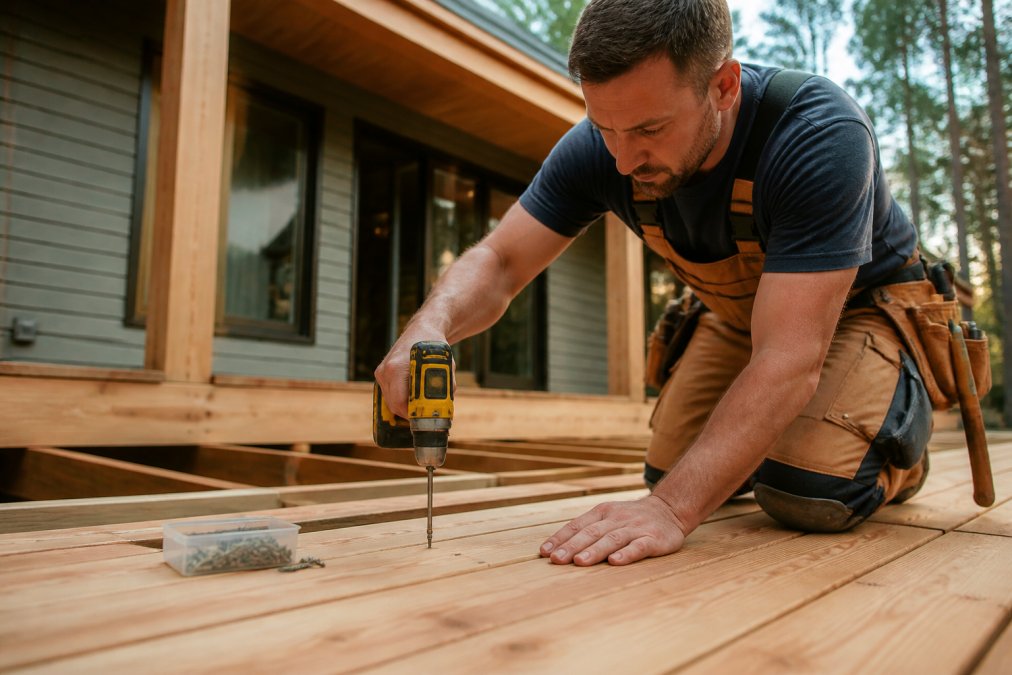
In tailoring, stitching holds the garment together and reveals the maker's patience. In carpentry, the equivalent is how seams, joints, and fasteners come together. Look for tight joints with no gaps where two pieces of wood meet. Screws should be driven flush, not stripped or angled. Uneven spacing suggests speed over care.
The same logic transfers to furniture. A dovetail joint with tight, even pins indicates a maker who cut each tail by hand or with precision machinery. In upholstered goods, check the seam allowance: a generous, consistent allowance means the piece can be reupholstered or repaired later.
Joint Construction and Structural Stability
The joints carry the load, so their construction determines whether a structure settles or sags. On a deck, check how the ledger attaches to the house and how posts connect to beams. Quality work uses proper hardware, not a handful of random nails. On fences, panels should align evenly and posts should sit plumb, meaning perfectly vertical. A quick test: sight down the length of a fence line or deck edge. Any wave or bow indicates a structural problem that will only worsen with time.
For furniture, the equivalent test is to lift one corner of a table or chair slightly off the floor. A well-constructed piece will feel rigid and return to level without twisting. This racking test is the single fastest way to distinguish solid joinery from glue-and-nail construction.
Digital Authentication and Certification: The New Marker of Craftsmanship
One angle most general guides miss is the role of digital authentication in verifying craftsmanship. Many high-end furniture makers, watch manufacturers, and apparel brands now embed serial numbers, QR codes, or NFC chips into their products. These digital passports link to a manufacturer's database that records the item's origin, materials, and production date.
Before you buy a piece that claims to be handcrafted, ask whether it comes with a certificate of authenticity or a digital record. A maker who invests in traceability is usually a maker who stands behind the work. The absence of any authentication mechanism is a yellow flag, especially at premium price points.
The Sound Test: Listening for Quality
Sound is an underused diagnostic tool. Knock on a solid wood tabletop and you will hear a clean, dense thud. Knock on a veneered particleboard surface and you will hear a hollow, tinny ring. A drawer that clatters or rattles indicates loose tolerances.
The same principle applies to doors, both interior and exterior. A solid-core door produces a dull, heavy sound when knocked; a hollow-core door sounds like a drum. These acoustic checks take seconds and require no tools, yet they reveal construction quality that visual inspection alone cannot detect.
Signs of a Professional Contractor vs. a Handyman
The distinction between a professional contractor and a handyman often comes down to process rather than talent. A skilled handyman may produce beautiful work, but a professional brings consistency, insurance, and accountability to every phase of the project. Signs of a professional contractor include a written contract, a clear timeline, and a willingness to pull permits. A handyman operating informally may avoid permits to keep costs low, which leaves you liable for code violations and unsafe structures.
Documentation, Permits, and Process
Ask to see the permit paperwork before work begins. Permits mean an inspector will verify the structural integrity of the work, an external check that protects you (hud.gov). Professionals also document their process with photos and written change orders. If a contractor cannot articulate their process for handling unexpected issues, such as rot discovered behind siding, consider that a red flag.
Questions to Ask Before Hiring a Contractor About Materials
Your questions should force specificity. Vague answers about "good quality wood" or "standard fixtures" hide a lack of knowledge. Before hiring, ask questions about materials that require the contractor to name specific products, grades, and sourcing.
Material Quality and Fiber Composition
For wood projects, ask whether the lumber is pressure-treated, naturally rot-resistant, or a composite product. Each choice carries different durability and maintenance expectations. Ask where the materials come from and how the contractor handles defects like warping or large knots. A professional rejects flawed boards; a less careful worker installs them and hopes you do not notice.
Surface Finish, Hardware, and Functional Components
Finish work reveals patience. Run your hand along trim, railings, and cabinet faces. Quality finish is smooth, with no splinters, and stain or paint should be even without drips or thin patches. Hardware should feel solid, not flimsy. Open and close drawers or gates repeatedly to test the glides and hinges. Fasteners should match the material and resist corrosion, particularly outdoors. The National Association of Home Builders guide to construction quality emphasizes that functional components like hinges and latches are common failure points, so test every moving part before you accept the work.
How to Evaluate Contractor References and Past Work
Evaluating contractor references requires asking about the contractor's process, not just their personality. A reference who says the contractor was "nice" tells you little. You need to know whether the crew showed up on time, whether problems were resolved fairly, and whether the finished project still looks good years later.
Questions to Ask Previous Clients
Ask references these specific questions: Did the crew protect your property and clean up daily? Were there unexpected costs, and how were they handled? Would you hire them again for another project? Most revealing of all: has the work held up through at least one full season of weather? A deck or fence that looks great at handoff but sags by spring reveals poor structural integrity.
Repairability and Structural Integrity: The Long-Term Test of Quality Craftsmanship
The ultimate test of quality craftsmanship is not how it looks on day one, but how easily it can be repaired in year ten. Quality work anticipates future maintenance. Deck boards should be individually replaceable. Fence panels should detach without dismantling the entire run.
Ask the contractor how they handle repairs on their own past work. A team that stands behind its installations and offers guidance on maintenance demonstrates confidence in its structural integrity. Poor work often requires complete replacement rather than simple repair.
Sensory Evaluation: Using Sight and Touch to Judge Quality
Sensory evaluation is the practice of using sight, touch, and even sound to assess the quality of materials and construction. Sight catches symmetry, alignment, and evenness of finish. Touch reveals smoothness, the absence of rough edges, and the solid feel of properly seated joints.
Run your hand along every surface you can reach. Feel for splinters, rough seams, and uneven transitions between materials. Check that drawers and doors close with a solid thud rather than a rattle. These sensory checks are fast, free, and remarkably accurate. The Occupational Safety and Health Administration guidance on workplace inspections notes that visual inspection remains the primary method for identifying structural deficiencies, a principle that applies just as well to your home as to a commercial site.
The Touch Test: Texture, Weight, and Temperature
Touch is not just about smoothness. It is also about weight and thermal conductivity. A solid brass hinge feels noticeably colder to the touch than a zinc-alloy imitation. A solid oak tabletop has a certain heft when you lift one edge; a veneered MDF piece feels surprisingly light for its size. Quality materials have a density that cheap substitutes lack.
Run your thumb along the edge of a cabinet door. A quality maker will have eased the edge, meaning it is slightly rounded so it feels comfortable in the hand. The same test applies to stone countertops: run your hand along the edge and feel for a consistent, polished profile versus a wavy, uneven one.
The Sound Test: What Your Ears Tell You
Sound is a reliable indicator of internal structure. Close a solid wood drawer and listen for a firm, damped sound. Tap a ceramic tile with your knuckle: a quality tile produces a clear, ringing tone, while a poorly fired tile sounds dull or thudding.
A common pattern among experienced inspectors is to use a small rubber mallet to tap tile installations. A hollow sound indicates a tile that is not fully bedded in thinset, which means it will crack under foot traffic.
The Smell Test: An Overlooked Indicator
Smell is rarely mentioned in craftsmanship guides, but it is informative. High-quality natural materials have distinct, pleasant odors: cedar, leather, and wool all have recognizable scents. If a piece of furniture or a new garment smells strongly of glue or formaldehyde, that is a sign of cheap manufacturing processes.
Repairability as a Sensory and Structural Test
The ultimate test of craftsmanship is not how the item looks on day one but whether it can be repaired in year ten. Before you buy, ask yourself: Can this be fixed? A quality wood chair has joints that can be re-glued. A quality leather boot can be re-soled.
Look for mechanical fasteners rather than permanent adhesives. Screws, bolts, and rivets indicate that a maker expects the item to be serviced. This repairability test is also an environmental test: repairable goods stay out of landfills. A well-made item that lasts 30 years and can be repaired twice has a fraction of the environmental impact of three disposable items purchased over the same period.
A Structured Sensory Checklist
Use this checklist when evaluating any item, from a deck to a dining table to a leather jacket:
| Sense | Test | Quality Indicator | Red Flag |
|---|---|---|---|
| Sight | Examine seams, joints, and edges | Consistent gaps, even alignment | Uneven spacing, visible glue, wavy lines |
| Touch | Run hand along all surfaces and edges | Smooth, eased edges, solid heft | Splinters, sharp edges, hollow lightness |
| Sound | Knock on panels, close drawers, tap tiles | Dense, dull thud; clean close | Hollow ring, rattle, clatter |
| Smell | Inhale near material surfaces | Natural or neutral scent | Strong chemical or adhesive odor |
| Movement | Operate all moving parts | Smooth, firm, no play | Sticky, loose, or grinding action |
This structured approach turns subjective 'feel' into a repeatable evaluation method. Practice it on items you already own.
Conclusion: Trust Your Eyes and Your Gut
Spotting quality craftsmanship comes down to looking at the right details and asking pointed questions. The visible signs, tight joints, even finishes, solid hardware, and clean processes, are reliable indicators of work that will hold up for decades. When a contractor hesitates to show you an active job site or answer material questions directly, trust that hesitation.
At Cole Home Service & Landscape Construction, we have over 25 years of experience and a 4.6 rating based on 9 reviews from clients who value our reliable communication and honest craftsmanship. We guide you through material choices, handle hidden problems with transparency, and treat every project, from a custom deck to a full kitchen remodel, as an extension of your home. For a free quote, reach out to our team.
Frequently Asked Questions
What does quality craftsmanship mean in home renovation?
Quality craftsmanship means the work is not just visually appealing but also structurally sound and built to last. It shows in precise joints, consistent stitching or seams, proper material selection, and attention to details like alignment and symmetry. A quality job also considers repairability, so future maintenance is possible. Look for evidence of structural integrity, such as solid wood construction without warping, and hand-finished touches that show care beyond what a quick production job would deliver.
How can you tell if a contractor is doing quality work during a project?
During a project, you can spot quality work by observing the job site. A professional contractor keeps the site clean and organized, protects your floors and furniture, and follows the agreed-upon plans and permits. Look at the joints and seams of the work in progress; they should be tight, even, and properly reinforced. Ask about the fasteners and hardware being used, and check that materials are stored correctly to avoid damage. A contractor who communicates proactively about progress and challenges is a sign of a professional.
What questions should you ask to verify a contractor's commitment to quality?
Ask specific questions about materials, process, and warranties. For example, ask what type of wood or composite they recommend for a deck and why, or what kind of underlayment they use for flooring. Inquire about how they handle unexpected findings, like water damage or uneven framing. Ask for references from projects similar to yours and follow up with those clients. Finally, ask about their warranty and how they handle callbacks for issues that arise after the project is complete.
How do you distinguish between professional finish work and DIY shortcuts?
Professional finish work is characterized by precision and consistency. Look at the trim: corners should be mitered tightly with no gaps, and caulk should be applied smoothly, not globbed on. In furniture or cabinetry, check that drawers glide smoothly and doors align perfectly. DIY shortcuts often rely on excessive caulk or filler to hide poor joints, use lower-grade fasteners, or ignore issues like structural balance and symmetry. A professional will also ensure the work meets local building codes and standards, which is a hallmark of structural integrity.
The challenge is finding a contractor whose standards match your own. Cole Home Service & Landscape Construction delivers honest craftsmanship with no job too small and clear communication via text throughout your project. Get a Free Quote and let our experience guide your next renovation.